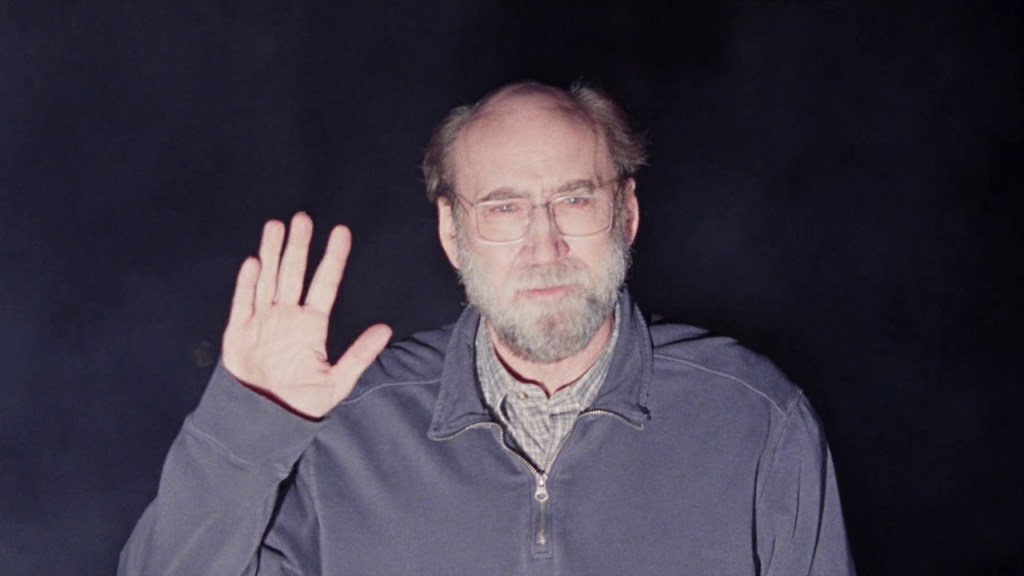
Concepts can either be the foundation a film is built on, or the house itself. The dangers of making a house out of a concept alone is that at the end of the day you are left with an empty shell with doors and windows and rooms and a roof. But nobody occupying it. And that is the case with 2023’s Dream Scenario.
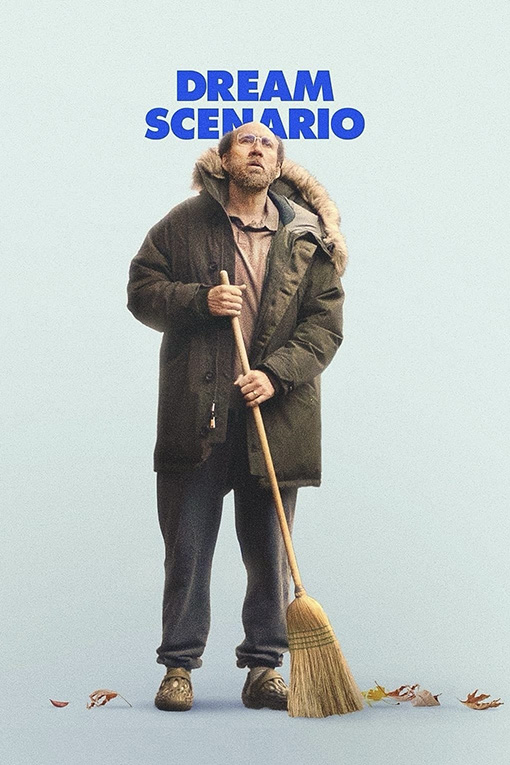
A fascinating concept, it remains half-explored and is ultimately wasted. At the end one wonders what was the point of that entire exercise? Nothing substantive is excavated of the concept itself. Instead, writer and director Kristoffer Borgli chooses to shift the film’s focus from the initial thought-provoking concept to a shallow allegory of fame. And from the manner in which that aspect is jimmied into the framework it is obvious that it came in later drafts – resulting in a by-product that, instead of studying this strange phenomenon of a man inexplicably appearing in random people’s dreams, seemingly not of his own volition, the film makes a trite point about a man desperate for recognition. Then this phenomenon makes him a viral household name, and he seizes on it to make his dream of getting published come true. But “AT WHAT COST?!” is the message it blares at us, taking us for children. Basically, he sells his soul for fame, and in the process loses everything that is real and true in his life, the love of his family, that he should have been content with from the beginning.
Nicolas cage gives a wonderful performance. In fact all the actors are beautifully balanced. That is the one feature of this film where director Kristoffer Borgli does an admirable job of maintaining a level pitch. The focus of the film is as it should be, on Nicolas cage. Shedding his 40-year-spanning screen persona with his arrhythmic delivery and often quirky off-beat characters, every outline, from his hairline, to his jawline, to the academic stoop and the shapeless dumpy frame and even sucking out every ounce of the natural charismatic smile of a movie star, Cage ‘becomes’ the unassuming Paul. His portrayal of Paul is pitch-perfect. We immediately understand why nobody respects him. And how that in-turn affects him.
Unfortunately, as the film progresses, it makes the fatal mistake of judging Paul, instead of trying to understand its main character or what is happening to him. The fact that it is an allegory means the film has already judged him and we are watching his sentence being carried out. It appears to take far more delight in highlighting the pitfalls of fame, rather than telling a story.
Perhaps I am being too hard on the film. After all it built a thorny bed to lie on by picking such a mend-bending concept in the first place. It is almost inevitable that the resulting film would leave the majority of its viewers dissatisfied by how it is treated because of the sheer number of possible outcomes. Unless, there is a virtuoso at the helm who can take it where most of us did not ‘dream’ of it going, and still felt inevitable. Otherwise you end up with this, a morality play that is apparently adamant that one must contain his/her ambitions. Instead of making it a character creating opportunities Kristoffer Borgli simply has us watch this unfortunate man flounder and sink. And in order to do that, the story, that was an exploration of the fantastic, decides it will make the unwelcome detour into science fiction. Suddenly, without explanation or build-up there is an electronic device that allows people to enter dreams. Now, the film shifts gears from lecturing us on fame, to lecturing us on how even our dreams will not escape being capitalized, a subject worthy of an entirely different film, but not this one, and definitely not with barely 15 minutes left in the film. The shot immediately before its introduction is the unambiguous shot of a photograph of Paul being engulfed in flames. Yes, he has gone to hell, the price of his vanity. We get it. And why conjure this science fiction dream device? It has a simple purpose. A short cut into Paul’s mind so the fimmaker can show us Paul’s hell – being without his family and only able to interact with them in his dreams.
Like most films these days it is yet another half-baked project with far too little time spent developing it, that could have elevated it to its most potent form. Instead, the filmmakers were obviously so much in love with the concept that it was rushed into production to make sure it would be the first to screens exploring the idea, rather than be overtaken by others. That is of-course a valid concern these days with projects getting green lit based on concept alone resulting in heaps of content exploring weird and wonderful ideas, and making utter hashes of them with no stories worth watching and shoddy execution. When they are not nurtured with skill and care to encourage germination, what we are left with is a dried up husk of a seed, and no plants or flowers to show for the time and money spent. And I don’t know about you, but to me a world without flowers is a nightmare scenario.
 Shot by Shot Reviews of Film and TV
Leave a comment