
There are films that take chances with the audience. Some in terms of challenging subject matter. Some in the use of style or its form, which relates to a variety of attributes. From aspect ratio to cinematography to editing to its use of music and so on.
Justine Triet’s 2023 Anatomy of a Fall is not a short film at 2 hours and 31 minutes, but compared to Scorsese’s Killers of the Flower Moon at 3 hours and 26 minutes it should have been more manageable. But it certainly wasn’t that. The challenging aspect in this case is with the chance I mentioned that it takes. And at least for me it lost me as a keen-eyed spectator half way through, as a direct consequence of that strategy. The chance the film takes has been tried before and that is to lay out the facts of a court case for the audience to judge. While in most cases film makers rely on sleight of hand as in the case of Presumed Innocent or showmanship as in the case of JFK, Anatomy of a Fall depends on little to no manipulation of the viewer. That requires disposing of most of the film making devices generally used to heighten one’s interest. So, no music, no camera moves, no narrative techniques. What we the cinema audience becomes in essence is a member of the audience in a court room. And it is just as exciting, or not, as that sounds.
By the film’s intermission if I hadn’t made the slightly long trip to that particular theatre I would have walked out. What had preceded was not bad by most measures. It just wasn’t my cup of tea. It isn’t until the last quarter that one realises the specific member of the court audience we are meant to become and in whose position we must formulate a pivotal decision. Indeed whether a decision is made at all is for us to judge as well. The director’s intention is admirable, but having me sit through almost 2 and a quarter hours of dry scenes for that meager pay off was not worthwhile in my book.
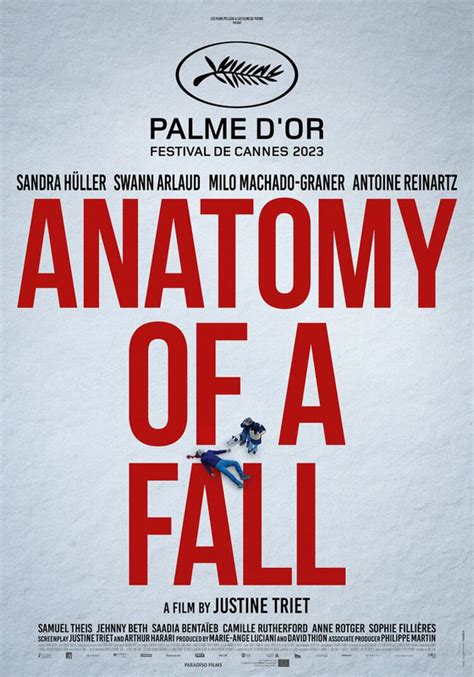
The film begins with the placard indicating that it won the Palm d’Or, the top prize at the Cannes Film Festival, and while it is a good film, nothing except for the acting stands out. Grudgingly sitting past the intermission I hoped the second half would get better and when it didn’t I had to conclude it must have been a dry year at the Cannes festival that year.
If you are expecting a whodunit with twists and revelations this is not it. The premise sets off on similar footing to 2022’s Decision to Leave – a man falls to his death under suspicious circumstances, that might just as easily be suicide or accidental. In either film the main suspect is the estranged wife. While the Korean Film tackles it from the point of view of the Detective solving the case, the French film leisurely lays the information out like dishes at a restaurant with a casual attitude to business. That is not to say the film is not without its highlights. As I mentioned, the performances are good all around. There is also the use of a particular instrumental version of a song right at the beginning that is very effective in putting us off balance in anticipation of what is to come. Unfortunately, that is the only point in the film, besides the ending, that genuinely affected me. Well, that, and the stark impression it left of how we are just at the mercy of people believing us in times of trouble. And how quickly society, this thing pretending to protect us like a blanket from the cold, can abruptly become a quagmire of doubt that can very easily snatch one’s freedom away. Or at least that’s how I occupied myself through most of the movie’s run time. At the end of the day I do not regret watching the film. What it meant to do it does well, but one has to be prepared for it. And maybe I just wasn’t. And I wanted the film to give me more than it took.
 Shot by Shot Reviews of Film and TV
Leave a comment